Morocco Travel Guide 2026: The Ultimate Journey from Casablanca to Marrakech
From the Atlantic coast and historic imperial cities to the Sahara Desert, Atlas Mountains, and the vibrant streets of Marrakech, Morocco offers an extraordinary mix of culture, landscapes, adventure, and hospitality.
If you are planning a trip to Morocco in 2026, a journey from Casablanca to Marrakech is one of the best ways to experience the country’s incredible diversity. Along the way, travelers can discover ancient medinas, traditional souks, historic kasbahs, Berber villages, dramatic mountain scenery, and the golden dunes of the Sahara.
Morocco is a destination where every day can feel completely different. You can begin your journey beside the Atlantic Ocean, walk through centuries-old streets in Fes, watch the sunset over the Sahara, cross the High Atlas Mountains, and finish among the colorful souks and lively atmosphere of Marrakech.
This guide will help you understand what to see, where to go, how to organize your journey, and how to make the most of your Moroccan adventure in 2026.
Morocco Travel Guide 2026: The Ultimate Journey from Casablanca to Marrakech
Why Visit Morocco in 2026?
Morocco continues to attract travelers because it offers something for almost every type of visitor: history, culture, food, nature, adventure, relaxation, and luxury.
The country’s official tourism office highlights destinations ranging from Casablanca and Rabat to Fes, Marrakech, Chefchaouen, Merzouga, Ouarzazate, Essaouira, and the Atlas Mountains.
One of the biggest advantages of traveling through Morocco is the variety of experiences available within a relatively compact journey. A single trip can combine:
- Historic imperial cities
- UNESCO-listed heritage
- Traditional Moroccan architecture
- Desert landscapes
- Camel rides and desert camps
- Mountain passes and Berber villages
- Atlantic and Mediterranean coastlines
- Moroccan cuisine and traditional tea
- Souks and artisan workshops
- Riads and boutique accommodations
- Hammam and wellness experiences
For travelers looking for more than a conventional city break, Morocco provides an opportunity to combine sightseeing with genuine cultural experiences.
Starting Your Journey in Casablanca
Casablanca: Morocco’s Modern Gateway
For many international travelers, Casablanca is the natural starting point.
Located on Morocco’s Atlantic coast, Casablanca is the country’s largest city and an important economic center. Unlike the more traditional atmosphere of Fes or Marrakech, Casablanca combines modern urban life with Moroccan heritage and Art Deco architecture.
Your first day can be dedicated to discovering the city’s main highlights before beginning your road trip toward the country’s historic heart.
Hassan II Mosque
The Hassan II Mosque is one of Casablanca’s most spectacular landmarks. Standing beside the Atlantic Ocean, the mosque is particularly impressive because of its location, architecture, intricate decoration, and enormous scale.
It is one of the places that should be included in almost every Casablanca itinerary.
The Old Medina
Casablanca’s Old Medina provides a completely different atmosphere from the modern city center. Wander through its narrow streets, discover small shops, and experience a more traditional side of the city.
Habous Quarter
The Habous Quarter is another interesting stop for travelers interested in Moroccan architecture, shopping, and local life. Its streets, traditional-style buildings, bakeries, shops, and craft stores make it a pleasant place to explore.
Casablanca Corniche
If you have additional time, head toward the coast and enjoy the Corniche. Cafés, restaurants, ocean views, and the Atlantic atmosphere make this a relaxing way to end your first day.
Travel tip: If you arrive in Casablanca by international flight, consider spending at least one night here rather than immediately continuing your journey. It gives you time to recover from your flight and begin your Moroccan experience at a relaxed pace.
From Casablanca to Rabat
The next stage of the journey can take you toward Rabat, Morocco’s capital.
Rabat offers a more peaceful atmosphere than Casablanca and is an excellent introduction to Morocco’s royal and historical heritage.
Explore the Kasbah of the Udayas, stroll through the old medina, and visit the area around the Hassan Tower and Mausoleum of Mohammed V.
Rabat is particularly attractive to travelers who enjoy architecture and history because traditional Moroccan influences blend with later urban development.
Fes: Entering Morocco’s Cultural Heart
After Rabat, continue toward Fes, one of the country’s most fascinating destinations.
Fes is famous for its historic medina, traditional crafts, souks, mosques, madrasas, and maze-like streets. Morocco’s tourism authority lists Fes among the country’s principal destinations for cultural and heritage immersion.
Exploring the Fes Medina
Walking through the medina is an experience in itself.
Instead of wide modern streets, you will discover narrow lanes filled with:
- Handmade leather goods
- Moroccan carpets
- Ceramics
- Spices
- Traditional clothing
- Metalwork
- Woodwork
- Local food
- Small artisan workshops
The medinas of Morocco are important cultural spaces where architecture, traditional crafts, commerce, and everyday life come together.
A local guide can be particularly useful in Fes because the medina is extensive and easy to navigate imperfectly on your first visit.
The Journey Toward the Sahara Desert
One of the most memorable parts of a Morocco itinerary is the journey from the northern cities toward the Sahara.
Rather than thinking of the desert as simply a destination, consider the road itself part of the experience.
The landscape gradually changes as you travel through the Middle Atlas region toward the south.
You may pass through:
- Ifrane
- Azrou
- Midelt
- The Ziz Valley
- Erfoud
- Rissani
- Merzouga
The scenery changes from green mountain landscapes to rocky plateaus, valleys, palm-filled oases, and finally the vast desert environment surrounding Merzouga.
Merzouga and the Sahara Desert
A Night Under the Desert Stars
For many visitors, the Sahara is the highlight of their Moroccan journey.
Merzouga is one of the best-known gateways to the Erg Chebbi dunes. Here, travelers can experience the desert in a way that goes far beyond simply taking photographs.
A typical Sahara experience may include:
- Camel trekking
- Sunset over the dunes
- Traditional music
- Dinner at a desert camp
- Stargazing
- Sunrise over the Sahara
- Breakfast in the desert
- Time to explore the surrounding area
The Moroccan National Tourist Office specifically promotes desert experiences that include crossing the desert landscapes and reaching the dunes by camel.
Sunset in the Sahara
Arriving at the dunes in the late afternoon allows you to watch the colors of the sand change as the sun disappears.
The experience is particularly memorable because of the silence and openness of the landscape.
A Night in a Desert Camp
Instead of returning to a hotel, spend the night in a desert camp.
Depending on your preference and budget, camps can range from simple traditional tents to comfortable luxury camps with private facilities.
After dinner, sit outside beneath the stars and listen to traditional desert music around the campfire.
From the Sahara to Ouarzazate
After Merzouga, the journey continues toward the dramatic landscapes of southern Morocco.
The route can pass through the Dades Valley, Todra Gorge, and Ouarzazate, depending on your itinerary.
Todra Gorge
Todra Gorge is famous for its towering rock walls and spectacular mountain scenery.
It is an excellent place for a short walk, photography, or simply enjoying the landscape.
Dades Valley
The Dades region combines mountains, valleys, kasbahs, and small villages.
This is an ideal part of the journey for travelers who want to see a quieter side of Morocco away from the major tourist cities.
Ouarzazate: The Gateway to the South
Ouarzazate is often called the gateway to the Moroccan desert and southern regions.
The city and surrounding area are known for their kasbahs, desert landscapes, and film history.
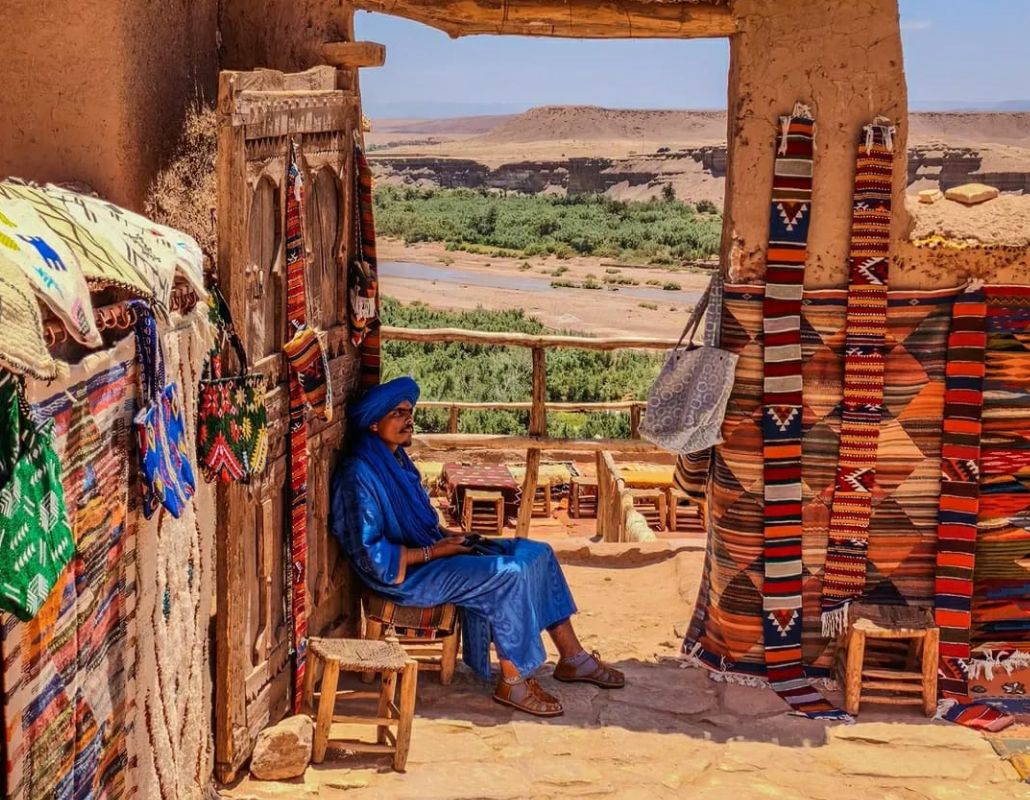
Nearby, Ait Ben Haddou is one of Morocco’s most recognizable historic sites.
Ait Ben Haddou
Ait Ben Haddou is a spectacular fortified village built with traditional earthen architecture.
Walking through its narrow lanes and climbing toward the upper part of the settlement provides wonderful views over the surrounding landscape.
It is one of the essential stops between the desert and Marrakech.
Crossing the High Atlas Mountains
One of the most scenic parts of the journey from southern Morocco to Marrakech is crossing the High Atlas Mountains.
The road climbs through dramatic mountain scenery before descending toward the Marrakech plain.
Along the way, you may see:
- Mountain villages
- Valleys
- Terraced fields
- Rocky peaks
- Traditional houses
- Local markets
- Berber communities
For travelers interested in photography, nature, and rural Morocco, this section of the journey can be just as memorable as the desert.
Marrakech: The Red City
Eventually, the road leads to Marrakech, one of Morocco’s most famous destinations.
Known as the Red City, Marrakech combines centuries of history with a lively contemporary atmosphere.
The Moroccan National Tourist Office describes Marrakech as a destination where tradition and modernity meet, with highlights including Jemaa el-Fna, the souks, the Medina, Majorelle Garden, El Badi Palace, Koutoubia Mosque, and the Menara area.
Jemaa el-Fna Square
Begin your Marrakech experience in Jemaa el-Fna.
During the day, the square has one atmosphere; in the evening, it becomes much more lively, with food stalls, performers, storytellers, musicians, and visitors moving between the surrounding souks.
It is one of the best places to experience the energy of Marrakech.
The Marrakech Souks
No trip to Marrakech is complete without exploring its souks.
You can find:
- Leather products
- Moroccan slippers
- Lanterns
- Spices
- Textiles
- Ceramics
- Carpets
- Jewelry
- Traditional crafts
Remember that shopping in the souks is part of the experience. Take your time, compare prices, and enjoy the interaction with local shopkeepers.
Koutoubia Mosque
The Koutoubia Mosque is one of Marrakech’s most recognizable landmarks.
Its historic minaret dominates the surrounding skyline and provides an excellent reference point when exploring the old city.
Majorelle Garden
For a quieter experience, visit the Majorelle Garden.
Its plants, pathways, architecture, and distinctive design provide a peaceful contrast to the busy streets of the Medina.
Staying in a Riad
One of the best ways to experience Marrakech is to stay in a traditional riad.
Riads are traditional Moroccan houses organized around an interior courtyard. Many have been converted into boutique guesthouses offering a combination of Moroccan architecture, hospitality, and modern comfort.
A Suggested 10-Day Casablanca to Marrakech Itinerary
If you have around ten days, the following route offers a good balance between cities, culture, desert, mountains, and Marrakech.
Day 1 – Arrival in Casablanca
Airport pickup, hotel check-in, Hassan II Mosque, Corniche and Casablanca city center.
Day 2 – Casablanca to Rabat and Fes
Travel toward Rabat, visit the main historical sites, then continue to Fes.
Day 3 – Explore Fes
Full day exploring the Fes Medina, souks, historic monuments, artisan workshops, and traditional neighborhoods.
Day 4 – Fes to Merzouga
Travel through Ifrane, the Middle Atlas, Midelt and the Ziz Valley toward the Sahara.
Day 5 – Sahara Desert Experience
Enjoy a camel ride, sunset in the dunes, traditional dinner, music and an overnight stay in a desert camp.
Day 6 – Merzouga to Dades Valley
Travel through Rissani, Erfoud and the spectacular landscapes of the Todra and Dades regions.
Day 7 – Dades Valley to Ouarzazate
Discover the valleys and kasbahs before continuing toward Ouarzazate.
Day 8 – Ait Ben Haddou and High Atlas Mountains
Visit Ait Ben Haddou, cross the High Atlas Mountains and arrive in Marrakech.
Day 9 – Explore Marrakech
Discover Jemaa el-Fna, the Medina, souks, Koutoubia Mosque and traditional neighborhoods.
Day 10 – Marrakech and Departure
Enjoy a relaxed final morning, shopping or visiting a garden before your departure.
This route can also be adapted according to the traveler’s interests. For example, families may prefer shorter driving days, while adventure travelers may want additional time in the Sahara or Atlas Mountains.


